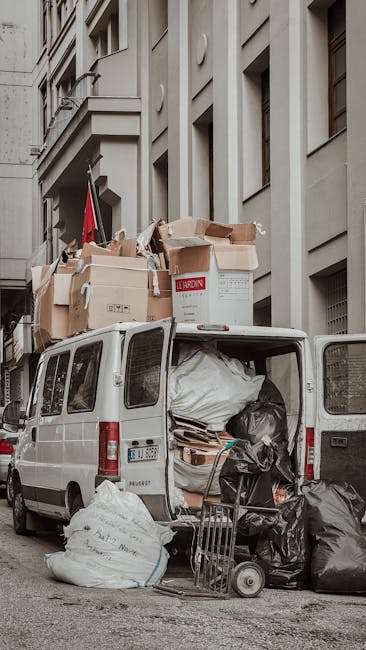
Clearing bulky waste in E16: man with van solutions
Posted on 02/06/2026
If you have an old sofa blocking the hallway, a broken wardrobe taking up the spare room, or builders' leftovers that simply need to go, you are not alone. Clearing bulky waste in E16: man with van solutions is often the quickest, least stressful way to get large items moved out of a flat, house, or workspace without turning the day into a back-straining mess. In E16, where lifts can be tight, parking can be awkward, and schedules tend to be busy, the right van support makes a genuine difference. This guide explains how it works, when it makes sense, what to watch out for, and how to choose the best approach for your situation.
Think of it as a practical, no-nonsense walkthrough. Not flashy. Just useful. And if you are trying to clear space before a move, a refurbishment, or a deadline, that is probably exactly what you need.
Why Clearing bulky waste in E16: man with van solutions Matters
Bulky waste sounds straightforward until you are standing in front of it. One item is heavy. Another is awkward. A third has no decent grip points and will not fit through the door unless somebody knows what they are doing. That is why a man with van solution is often the sensible middle ground between "try to do it yourself" and "book a large-scale removal team".
In E16, bulky waste clearance often comes up during home moves, flat clear-outs, office changes, landlord handovers, and post-renovation jobs. The local reality matters here. Apartment blocks, limited loading space, narrow communal areas, and busy roads can quickly turn a simple task into a small logistical puzzle. A van-based service helps solve that by bringing the vehicle, the lifting help, and the route planning together in one place.
There is also the simple matter of time. A bulky item sitting around does not just take up space; it slows everything else down. You end up working around it, cleaning around it, and worrying about it. Let's face it, an old mattress leaning in the corner has a way of making an entire room feel unfinished.
For readers preparing a wider move, it can help to pair bulky waste clearance with decluttering and packing advice. A useful starting point is this decluttering guide for a more organised move, and if you are timing the clearance around house handover, a cleaning checklist before moving out can keep the last week much calmer.
Expert summary: The best bulky waste solution is not always the biggest one. In many E16 situations, a well-timed man with van service offers the right balance of speed, lifting support, access flexibility, and cost control.
How Clearing bulky waste in E16: man with van solutions Works
The process is usually simpler than people expect, but the details matter. A reliable man with van setup normally starts with an item description, a rough idea of volume, and a note about access. That may sound obvious, yet the access part is often the bit people forget. Is the item on the ground floor or up three flights of stairs? Is there a lift? Can the van stop close by? These little questions change the whole job.
Once the load is understood, the collection can be planned around the right size of vehicle and the right number of hands. For a single bulky item, the job may be quick. For a mixed load of furniture, appliances, and bagged waste, the move needs a bit more structure. In practice, the team arrives, checks the access, lifts and loads items carefully, secures them in the van, then removes them to the agreed destination for reuse, recycling, disposal, or transfer.
For customers who are already moving home, the same trip can sometimes be used to remove unwanted furniture before the rest of the move starts. That is especially handy if you are reducing what you take with you. If you are also planning a full move, these stress-free house move tips are worth a look, and packing guidance for changing homes can help you avoid the classic last-minute panic.
Some jobs are same-day, some need a bit of notice. If the bulky waste is urgent, particularly around tenancy deadlines or builder schedules, you may also benefit from last-minute van options in the local area. Not every day runs to plan, after all.
Key Benefits and Practical Advantages
People usually book bulky waste clearance for one of three reasons: speed, safety, or convenience. The best man with van services cover all three without making the job feel inflated or overcomplicated.
- Less lifting stress: Heavy or awkward items are handled by people used to moving them, which lowers the risk of bruises, strained backs, and scratched walls.
- Faster clear-outs: What might take you all afternoon can often be done in a much shorter window, especially if access is straightforward.
- Better for tight spaces: E16 flats, maisonettes, and upper-floor properties often benefit from a smaller vehicle and a crew that knows how to work in confined areas.
- Flexible load sizes: You do not need to wait until you have a full lorry's worth of waste. A van is ideal for mixed or partial loads.
- Reduced disruption: If you are managing a family routine, a tenancy end, or a business closure, less disruption is a very real benefit.
- Potentially better sorting: Good operators will separate items sensibly for recycling, reuse, or disposal rather than treating everything as one pile.
There is also a calmer side to all this. A clean, cleared room changes how a property feels. You notice the light again. The floor looks bigger. The place suddenly breathes. That matters more than people admit.
If you are trying to reduce the amount of furniture going out, a few related reads can help. For instance, sofa storage advice is useful when you are unsure whether to keep, store, or remove a large piece, while bed and mattress moving tips can be useful if your bulky item is being relocated rather than discarded.
Who This Is For and When It Makes Sense
Clearing bulky waste in E16 with a man with van service makes sense for a wide range of people, but the common thread is simple: you have items that are too big, too awkward, or too inconvenient to move alone.
Typical situations
- Tenants clearing a flat before check-out
- Homeowners replacing old furniture
- Landlords dealing with leftover items after a move-out
- Office managers clearing desks, chairs, or filing units
- Students moving from shared accommodation with too much to fit in one go
- Families dealing with years of "we should get rid of that" clutter
- Anyone moving heavy pieces from a flat with stair-only access
It also suits people who are not comfortable lifting. Truth be told, a lot of bulky waste jobs are made awkward by confidence, not just weight. Someone thinks they can tilt a wardrobe alone, and thirty seconds later the hallway is blocked and the door frame has a new scuff mark. That is exactly the sort of thing a proper van team helps avoid.
If you are a student in the area or helping someone move out of a shared property, you may also find student removals support useful because it often overlaps with small bulky item clearances and quick turnaround schedules.
Step-by-Step Guidance
If you want the day to run smoothly, a clear process helps. Here is the practical version.
- List the items carefully. Note what needs removing, whether it can be dismantled, and whether anything is fragile, dirty, or awkwardly shaped.
- Measure access points. Doorways, stairwells, lifts, basement corridors, and parking distance all matter more than people think.
- Separate keep, donate, recycle, and remove. Even a rough sort makes the loading stage much easier.
- Check for hazards. Sharp edges, loose glass, leaking appliances, or mouldy soft furnishings should be flagged before collection.
- Choose the right vehicle size. Too small means delays. Too big can be unnecessary for a compact E16 job.
- Prepare the route. Move smaller items out of the way so the team can work safely and quickly.
- Confirm the destination for the waste. Good practice means knowing whether items are headed for reuse, recycling, or disposal.
- Do a final walkthrough. Check cupboards, sheds, balconies, and loft corners. People always forget one thing. Always.
If you are juggling other moving tasks at the same time, it can help to think in layers. First clear the bulky waste. Then pack what is staying. Then clean. Then move. That order is often less chaotic than trying to do everything at once. For more support around packing materials, packing and boxes guidance can help you stay organised.
Expert Tips for Better Results
Here is where the job gets easier. A few small choices make a big difference.
- Disassemble what you can: Flat-pack furniture, bed frames, and shelving units usually move more safely in parts.
- Keep screws and fittings together: A labelled bag taped to the item saves a headache later if anything is being reused.
- Protect walls and floors: In a tight corridor, one careful wrap of a corner can save an expensive repair.
- Be honest about weight: If it feels too heavy for two people, it probably is. No shame in that.
- Book around access times: In E16, avoiding peak congestion or awkward delivery windows can smooth out the whole job.
- Think about reuse: A good service can sometimes separate items that are still usable from true waste, which is better for everyone.
One of the most common "small wins" is preparing the item before the team arrives. Even 10 minutes of prep can save 30 minutes of faffing. And yes, faffing is the technical term, apparently.
For heavier or more technical items, specialist guidance matters. If your bulky waste includes an upright piano, for example, it should not be treated like a standard sofa or chest of drawers. Professional piano removal support exists for a reason, and the same applies to items that need more than brute force. For safer lifting principles, kinetic lifting techniques and safe solo lifting advice are worth understanding before you attempt anything on your own.

Common Mistakes to Avoid
Most bulky waste problems are preventable. That is the good news. The not-so-good news is that the mistakes are usually very ordinary.
- Underestimating the size: An item that looks "van-sized" in your head may be much bulkier in real life.
- Forgetting access restrictions: Estate barriers, narrow turns, parking limits, and stair-only access can all affect the plan.
- Mixing hazardous items with general waste: If something is leaking, sharp, or potentially unsafe, it needs separate handling.
- Leaving sorting to the last minute: A pile on the morning of collection is a recipe for delays.
- Choosing only on price: Cheap can become expensive if the job is rushed, underquoted, or not properly insured.
- Not asking where the items go: Responsible disposal and recycling should be discussed upfront, not assumed.
A quieter mistake is emotional, not logistical. People hold onto broken, unwanted items for too long because they feel guilty about letting them go. That is understandable. But a broken freezer or sagging sofa does not improve with age. If anything, it just gathers more dust. The room deserves better.
Tools, Resources and Recommendations
You do not need fancy equipment to prepare for a bulky waste collection, but a few practical tools make things smoother.
- Measuring tape: Useful for doorways, hallways, lift openings, and item dimensions.
- Marker pens and labels: Handy if you are separating items to keep, store, or remove.
- Strong gloves: Better grip, less chance of scrapes, and a little more confidence when handling rough edges.
- Basic wrapping materials: Blankets, old sheets, or suitable covers help protect your home while items are moved out.
- Clear route space: This one is free, and it saves time. Move shoes, bins, small boxes, and loose clutter out of the path.
For readers who are also planning a full or partial move, a services overview can help you understand how bulky waste removal may sit alongside other moving needs, while general removals support is useful if your waste clearance is part of a broader moving day.
You may also want to review recycling and sustainability guidance if reducing landfill impact matters to you. It often does, once people start sorting through what is actually still useful.
Law, Compliance, Standards, or Best Practice
Bulky waste clearance is not just about getting rid of stuff. In the UK, responsible handling matters. You do not need to become a legal expert, but you should know the basics.
First, waste should be moved by people who handle it properly and know where it is going. If a service is vague about disposal, that is a caution sign. Second, some items require extra care: appliances, upholstered items, sharps, or anything potentially contaminated should be dealt with according to sensible industry practice. Third, insurance and safety should not be treated as an afterthought. If something gets damaged during loading, or if access is tricky, you want to know the service is prepared for that reality.
Good practice also means respecting building rules, access restrictions, and local parking conditions. In places like E16, that is not merely polite. It is practical. The best teams work neatly, communicate clearly, and leave less mess behind than they found. That is the standard to look for.
If you want reassurance on how a provider approaches these issues, insurance and safety information and the health and safety policy are both sensible pages to review. They help set expectations before anyone lifts the first item.
For general trust and transparency, it is also reasonable to check policies such as terms and conditions and privacy information. Not the most thrilling reading, granted, but useful all the same.
Options, Methods, or Comparison Table
There are several ways to deal with bulky waste in E16. The best one depends on how much you need removed, how quickly it needs to happen, and whether you are comfortable doing any of the lifting yourself.
| Option | Best for | Pros | Limitations |
|---|---|---|---|
| Self-moving with your own vehicle | Very small loads and low-risk items | Can be cheap if you already have transport | Heavy lifting, possible damage, awkward parking, limited capacity |
| Man with van bulky waste clearance | Mixed loads, single items, and tight-access properties | Flexible, quick, less physical strain, suitable for flats | Needs accurate item descriptions and clear access planning |
| Full removal company | Larger property clear-outs or complex moves | More manpower and bigger capacity | Can be more than you need for simple bulky waste |
| Council collection or skip-style approach | Planned clear-outs with enough space and time | Useful for certain types of waste | May not suit urgent jobs, stairs, or awkward furniture |
For many E16 residents, the man with van route wins because it sits neatly between convenience and control. Not too much. Not too little. Just enough support to get the job done properly.
Case Study or Real-World Example
Here is a realistic example from a typical E16-style situation. A tenant in a fourth-floor flat near the Docklands area had to clear a tired three-seater sofa, a broken desk, two small bookcases, and an old freezer before the end of the tenancy. The lift was small, the communal corridor was narrow, and the building had limited loading space. In other words, the sort of day that can go sideways if you improvise.
Rather than trying to drag everything down in stages alone, the tenant sorted the items into three groups the night before: keep, remove, and maybe. The freezer was unplugged in advance, the desk was partly dismantled, and the route from the flat to the van was cleared of shoes, plant pots, and the usual life clutter. The team could then load efficiently, protect the walls around the door frame, and complete the job without endless back-and-forth.
The real win was not just speed. It was the mood of the day. The flat felt manageable again. The tenant could finish cleaning, hand back the keys, and leave without that horrible feeling that something had been forgotten. That sense of relief is not a small thing. It is the point.
If the move itself is nearby and you are dealing with a local estate or flat block, these area-focused guides can help set expectations: what to expect in E16 estate removals, moving from Royal Docks flats, and van tips for narrow streets and tight access.
Practical Checklist
Use this before collection day. It keeps the whole process grounded.
- List every bulky item clearly
- Measure each large item and all key access points
- Separate anything fragile, reusable, or hazardous
- Dismantle furniture where safe and practical
- Remove loose items from drawers, shelves, and cabinets
- Clear hallways, stairs, and entrance paths
- Confirm parking or loading access
- Check the collection time and any access instructions
- Keep paperwork, keys, and building fobs ready
- Do a final sweep of cupboards, sheds, and storage areas
Small reminder: if an item feels too awkward for one person, trust that instinct. It usually is. A careful pause now is better than a rushed lift later.
Conclusion
Clearing bulky waste in E16 does not have to become a drawn-out headache. With the right man with van approach, you can clear space safely, reduce strain, and keep the process moving at a sensible pace. The best results come from clear planning, honest communication, and a realistic view of what needs doing. Simple, really.
Whether you are preparing for a move, refreshing a property, or just getting rid of furniture that has long overstayed its welcome, the smartest step is usually the practical one. Sort the items, plan the access, and choose support that fits the job rather than forcing the job to fit your day. It tends to work out better that way.
Get a free quote today and see how much you can save.
And if you are already making room for a cleaner, lighter space, that is a good sign. It means the hard part is nearly behind you.